

Simple Ways to Reduce Toxins in Your Bedroom don’t have to involve a complete home makeover. Since we spend nearly one-third of our lives sleeping, the products we surround ourselves with each night, from our sheets and mattresses to our laundry detergent and lighting, can play a role in our overall environment. The good news is that creating a more lo-tox bedroom can happen gradually. By making small, intentional swaps over time, you can build a sleep space that feels cleaner, calmer, and more aligned with your wellness goals without the stress of replacing everything at once. Keep reading to see the swaps I made in my bedroom that I feel have made a huge difference!
lighting

Blue light from traditional LEDs can interfere with melatonin production and your circadian rhythm, especially at night. A red light bulb provides softer, warmer lighting that still allows you to read or wind down without overstimulating your brain.
It’s one of the easiest swaps I made in my bedroom.
organic pillows and pillow cases
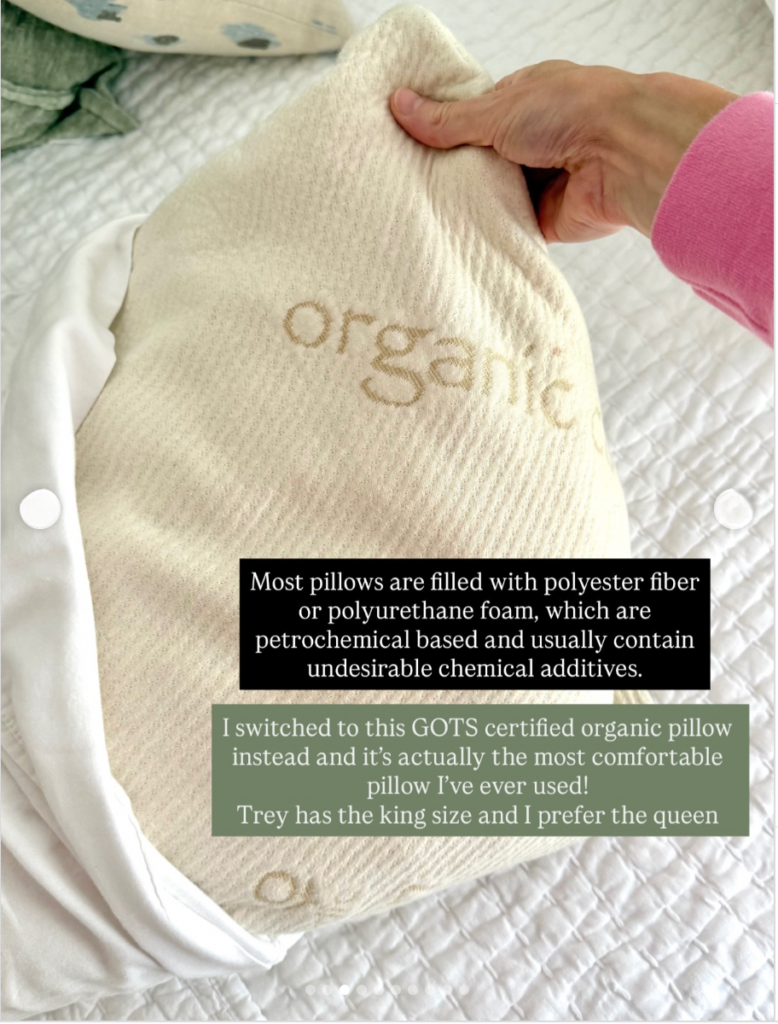
Your pillow is something you’re in direct contact with for hours every night, so the materials matter. Most conventional pillows are filled with polyester fiber, which is petroleum-based and may contain chemical additives. Choosing an organic option can help reduce your exposure to synthetic materials while you sleep.
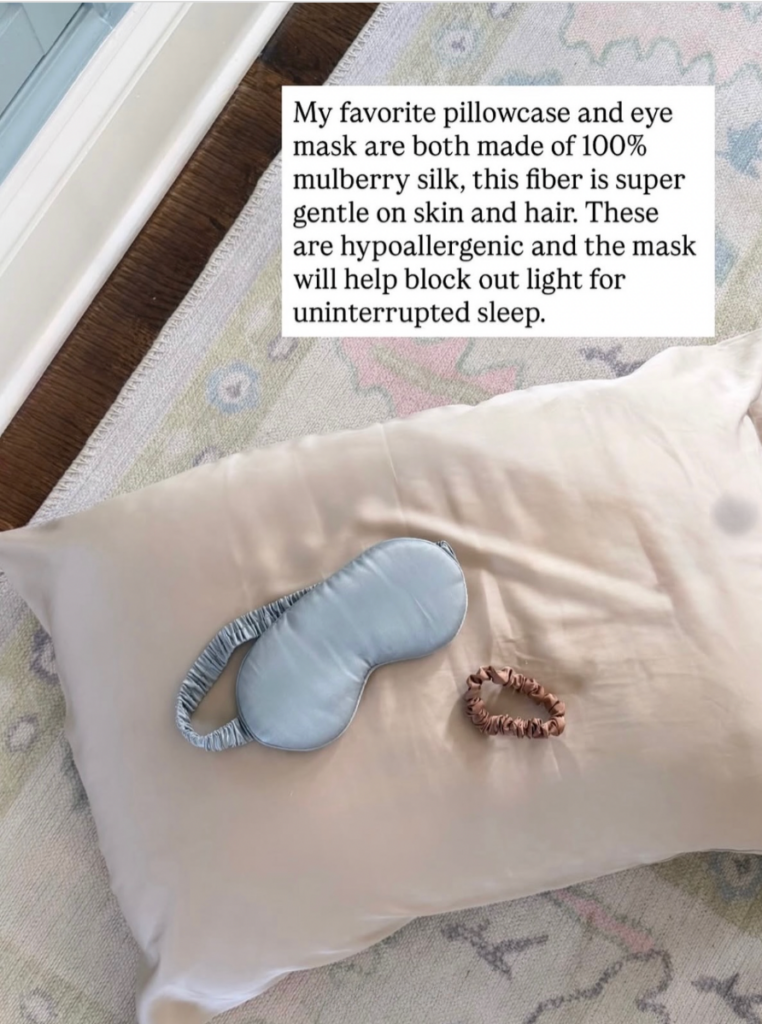
I also like pairing an organic pillow with a silk pillowcase and silk sleep mask. Since these products come into direct contact with your skin and hair each night, opting for natural fibers is an easy way to create a more intentional sleep environment. As an added bonus, silk is known for being gentle on both skin and hair, making it a luxurious and practical addition to your bedtime routine.
mattress and sheets
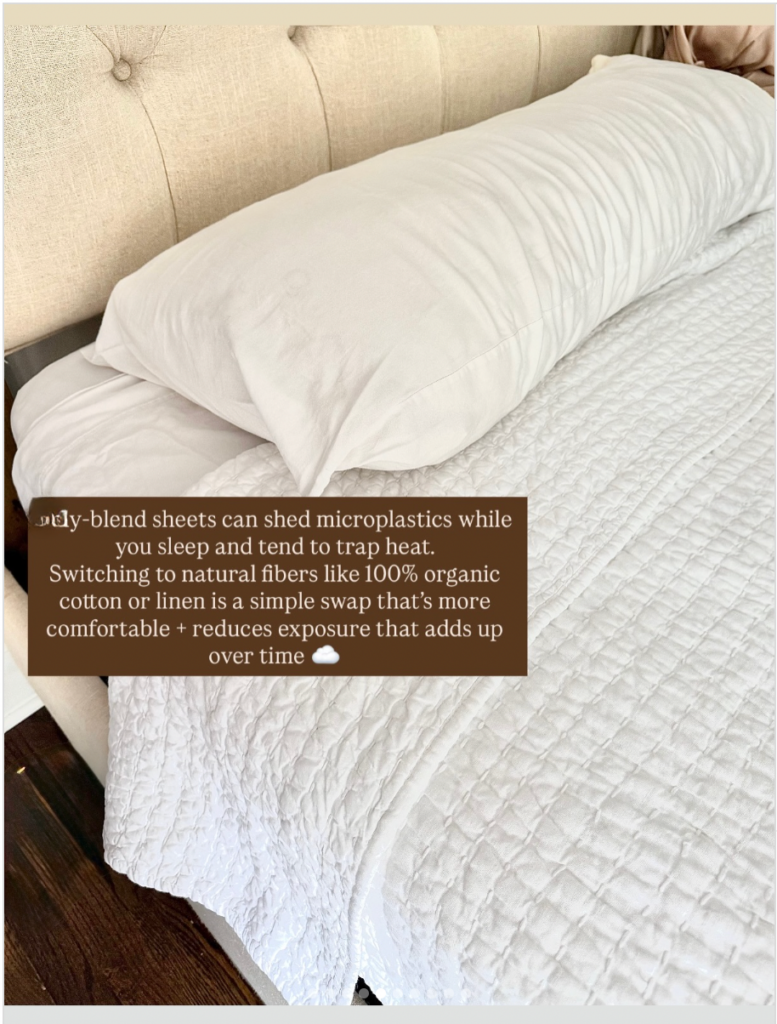

Your mattress and sheets are some of the largest surfaces your body comes into contact with every day, making them a great place to focus your lo-tox efforts. Many conventional sheet sets are made from polyester blends, which are synthetic, petroleum-based fabrics. These materials can shed microplastics over time and tend to trap heat while you sleep.
When it’s time to replace your bedding, consider choosing natural fibers like organic cotton or linen. They’re breathable, durable, and can help create a cooler, more comfortable sleep environment.
A mattress is a bigger investment, so I didn’t rush the process. I spent time researching brands to find one made with natural materials like cotton and wool and without fiberglass. You don’t have to make this swap overnight, but when the time comes for a new mattress, it’s worth looking into the materials that you’ll be sleeping on every night.
Pajamas

Once you’ve thought about what you’re sleeping on, it’s worth considering what you’re sleeping in. Since your pajamas are in contact with your skin for hours each night, choosing natural fibers can be another simple way to reduce everyday exposure to synthetic materials.
shop the post

Creating a lo-tox bedroom doesn’t have to happen all at once. In fact, I think the most sustainable approach is to make small, intentional changes as products need to be replaced. That’s exactly how I built my own bedroom over the years—one swap at a time.
Whether you start with a red light bulb, organic bedding, or simply a new pair of PJ’s, every step is progress. The goal isn’t to create a perfect home, but to create a space that supports overall wellness.
I hope these simple swaps give you a few ideas for your own bedroom. Save this list for the next time you’re shopping for a replacement, and remember that small changes can add up to a big difference over time. And if you’re ready to take the same low-tox approach beyond your bedroom, be sure to check out my post on building a capsule wardrobe with natural fibers. Creating a healthier home doesn’t have to happen all at once—every intentional choice is a step in the right direction.
Thanks for reading!
Xo-Lo







No Comments